
Many people have been eating the same breakfast for decades: two slices of bread with jam or a croissant with coffee. But just because something worked well in the past doesn’t automatically mean it’s the best choice when you’re 60, 70, or 80.
Your body changes as you age, and it becomes more important to make every meal as nutrient-rich as possible. Find out here how you can do just that first thing in the morning with breakfast.
Healthy Breakfast from Verival – Discover Now
Why Breakfast Is a Key Meal After Age 60
Many older adults tend to eat smaller portions throughout the day. At the same time, breakfast is often surprisingly one-sided. While a slice of bread with jam or a sweet pastry provides quick energy, it usually contains very little protein and comparatively few micronutrients.
This is particularly important because the body becomes less efficient at utilizing protein as we age. Many professional organizations therefore recommend a higher protein intake for older adults than for younger people. Those who consume part of this at breakfast find it much easier to meet their daily requirements.
What makes an ideal breakfast for people over 60
The perfect breakfast isn’t just a single superfood. It’s all about the combination.
Complex carbohydrates, such as those found in oatmeal or whole-grain products, provide a good foundation. They deliver energy without causing blood sugar levels to fluctuate sharply.
Add a source of protein. Plain yogurt, skyr, quark, eggs, or unsweetened soy products ensure the meal keeps you full longer. At the same time, they help maintain muscle mass.
Fresh fruit, berries, nuts, or seeds add fiber, healthy fats, and numerous other nutrients to breakfast.
In short: The ideal breakfast does more than just fill you up. It also provides exactly the nutrients that are often lacking as we age.
The most important components of a healthy breakfast for those over 60
When you look at many people’s diets, a pattern emerges: Carbohydrates are usually present in sufficient quantities, whereas protein and fiber often are not.
That is exactly why it’s worth starting with the first meal of the day.
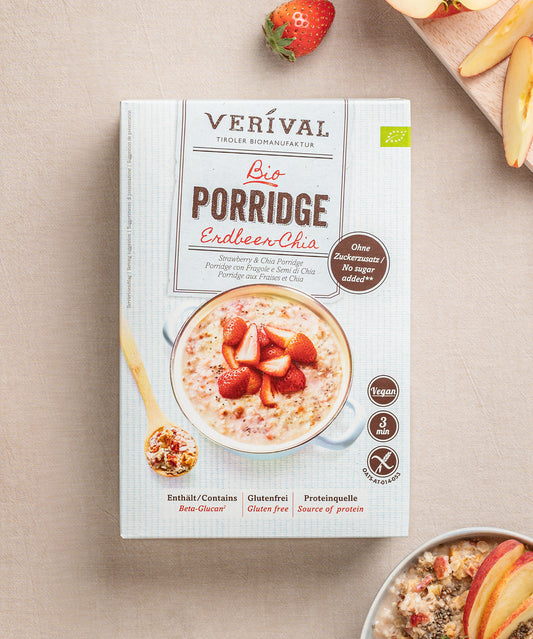
Oatmeal is a good example of this. It provides complex carbohydrates, contains fiber, and can be combined in many ways. Together with yogurt or skyr, it creates a meal that keeps you full significantly longer than toast or sweet breakfast cereals.
Nuts also deserve a place on the breakfast table. A small handful of walnuts, almonds, or hazelnuts provides healthy fats and adds a satisfying crunch.
Including fruit also brings color and variety to the bowl. Berries are particularly well-suited, as they contain relatively little sugar while being rich in phytochemicals.
A Warm Breakfast: The Benefits for Digestion and Circulation
While cold sandwiches or muesli have long been the standard in Central Europe, more and more people are discovering warm breakfast options for themselves.
A warm porridge feels comforting not just on cold days. Its soft consistency makes it easy to chew and allows for customization.
For people who have little appetite in the morning, a warm breakfast can also often be more appealing than a sandwich right after getting up.
The best breakfast for stable blood sugar levels
Anyone who gets hungry again quickly after breakfast or feels tired and lethargic around ten o’clock should take a look at the composition of their meal.
Often, the problem isn’t the quantity, but the choice of foods.
Sweet pastries, sugary breakfast cereals, or white bread cause blood sugar levels to rise rapidly. Shortly afterward, they drop again. It is precisely these fluctuations that can contribute to fatigue and cravings.
Breakfasts that combine fiber, protein, and healthy fats are much better. Porridge with nuts and berries or muesli with plain yogurt usually keeps you full much longer.
Heart-healthy breakfast: Foods that support cholesterol and blood pressure
A heart-healthy breakfast is easier than you might think. Often, small changes are all it takes.
If you eat oatmeal regularly, you automatically consume more fiber. The beta-glucans it contains, in particular, have been studied for years and can help lower cholesterol levels.
Whole-grain products, nuts, and seeds also fit well into a heart-healthy breakfast. At the same time, it’s best to treat highly sweetened breakfast items as an exception.
5 Perfect Breakfast Recipes for People Over 60
A healthy breakfast doesn’t have to be complicated or time-consuming. The following recipes provide fiber, protein, and essential nutrients for a great start to the day. From creamy porridge to overnight oats to a hearty breakfast with eggs, there’s something for every taste.
The Classic: Warm Porridge Basic Recipe

Here’s a simple recipe for the popular oatmeal that has become a staple on most breakfast tables.
Prep time: 2 min.
Cooking time: 3 min.
Total time: 5 min.
Servings: 1
Ingredients
- 250 ml milk or a plant-based alternative for vegans (oat milk, almond milk, soy milk, etc.)
- 50 g rolled oats
- 1 pinch of salt
- 2 tsp agave syrup (optional)
- 1/2 tsp cinnamon (optional)
Preparation
- Bring the rolled oats, a pinch of salt, and your choice of sweetener to a boil in the milk or plant-based milk (preferably while stirring constantly). Cooking the oats in hot water alone is also an option.
- Let the porridge sit for 3 minutes.
- Pour the porridge into a bowl and sprinkle with cinnamon.
- Enjoy!
Carrot Cake Porridge for an Extra Dose of Vitamins

Prep time: 10 min.
Total time: 10 min.
Servings: 1
Ingredients
- 50 g rolled oats
- 200 ml oat milk or another plant-based milk alternative, or water (for an even lower-calorie version)
- 1 pinch of salt
- 2 grated carrots
- 1/2 tsp cinnamon
- 1 tsp almond butter
- 1 tbsp walnuts (optional)
Instructions
- First, grate the carrots finely and then add them to a pot.
- Next, add the rolled oats and the plant-based milk. If you want to cut back on calories, you can also replace half of the plant-based milk with water.
- Then add the salt and a little cinnamon to the pot.
- Now cook the porridge for about 5–7 minutes. When the porridge is almost done and nice and creamy, remove the pot from the heat and stir in a little almond butter.
- Then transfer the porridge to a bowl. Now you can top the porridge with your choice of toppings, such as delicious walnuts.
Bircher-Style Overnight Oats

Prep time: 5 min.
Let the porridge sit in the fridge: 3 hours
Total time: 3 hours 5 min.
Servings: 1
Ingredients
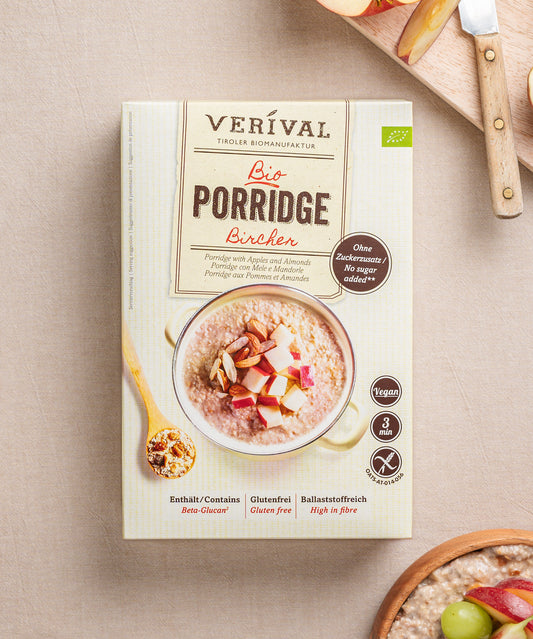
- 50 g Bircher porridge
- 120 ml (plant-based) milk or water
- A handful of nuts of your choice, e.g., pecans or almonds
- A few slices of apple of your choice
Instructions
- Place the Bircher porridge in a mason jar.
- Then add 120 ml of your chosen liquid and mix the ingredients together well.
- Place the mason jar in the refrigerator overnight or for at least 3 hours.
- Stir the porridge mixture well one more time before eating.
- When your overnight oats are nice and creamy, they’re ready.
- Now you can top your overnight oats with nuts of your choice, flaxseeds or chia seeds, and a slice of apple.
Tip: If you find that the porridge mixture is too thick, add a little more liquid.
Chocolatey Protein Breakfast

Prep time: 5 min.
Let the porridge sit in the fridge: at least 2 hours
Total time: 2 hours 5 min.
Servings: 1
Ingredients
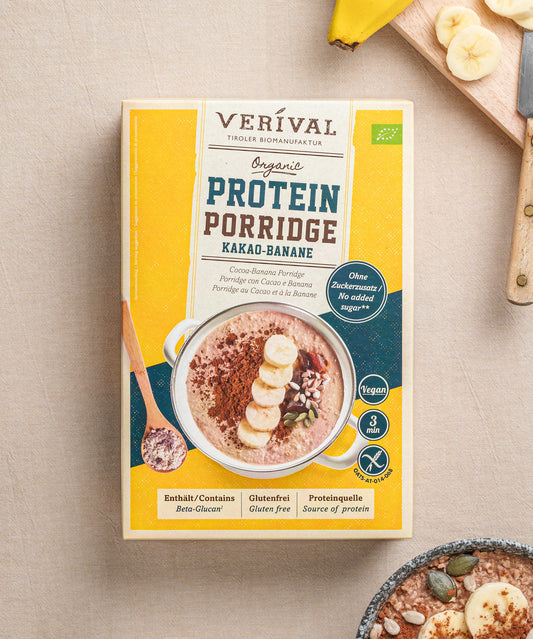
- 80 g Cocoa-Banana Sport Porridge
- 140 ml milk or plant-based milk
- 1 tsp agave syrup or similar sweetener (optional)
- Toppings of your choice: bananas, berries, nuts, nut butter, cacao nibs, dried fruit
Preparation
- Combine water, milk, or a plant-based alternative with the Verival Sport Porridge in a glass and stir well.
- Place your mixture in the refrigerator overnight or for at least 2 hours. This allows the mixture to soak properly and develop its delicious consistency.
- The next day, take your overnight oats out of the fridge and give them a good stir.
- If desired, you can top your overnight oats with your choice of toppings.
Hearty Egg Breakfast with Whole-Grain Bread and Avocado

Prep time: 5 min.
Cook time: 10 min.
Total time: 15 min.
Servings: 1
Ingredients
- 2 eggs
- 2 slices of whole-grain bread
- 1/2 avocado
- 1 handful of cherry tomatoes
- Salt and pepper to taste
- Fresh herbs of your choice, e.g., chives or parsley
Preparation
- Boil the eggs soft or hard, as desired.
- Meanwhile, toast the whole-grain bread.
- Mash the avocado with a fork and spread it on the bread slices.
- Peel the eggs, slice them, and arrange them on the bread.
- Cut the cherry tomatoes in half and serve them on the side.
- Season with salt, pepper, and fresh herbs.
Tip: For even more fiber, you can add some flaxseeds or seeds to your breakfast. If you prefer a heartier meal, you can also add some cottage cheese to the bread.
Conclusion: The perfect breakfast for those over 60 – nutritious, simple, and delicious
The perfect breakfast for those over 60 doesn’t follow a rigid diet plan. What’s much more important is a balanced combination of fiber, protein, and as few highly processed ingredients as possible.
Even small changes can make a difference. If you opt for oatmeal, plain yogurt, nuts, and fresh fruit more often in the morning, you’ll lay a solid foundation for an energetic start to the day—and provide your body with many nutrients that become especially important as you age.
Warm Organic Breakfast from Verival – Try It Now
Frequently Asked Questions
What should older adults eat for breakfast?
A balanced breakfast for older adults should contain fiber, protein, and healthy fats. Oatmeal, whole-grain products, plain yogurt, eggs, nuts, and fresh fruit are particularly well-suited for this. This combination keeps you full for a long time and provides important nutrients to start the day.
What should you eat first thing in the morning?
There is no single food that everyone should eat first thing in the morning. However, a breakfast that keeps blood sugar levels as stable as possible and does not consist mainly of sugar is recommended. Oatmeal, whole grain products, protein sources, and fresh fruit are good choices for this.